

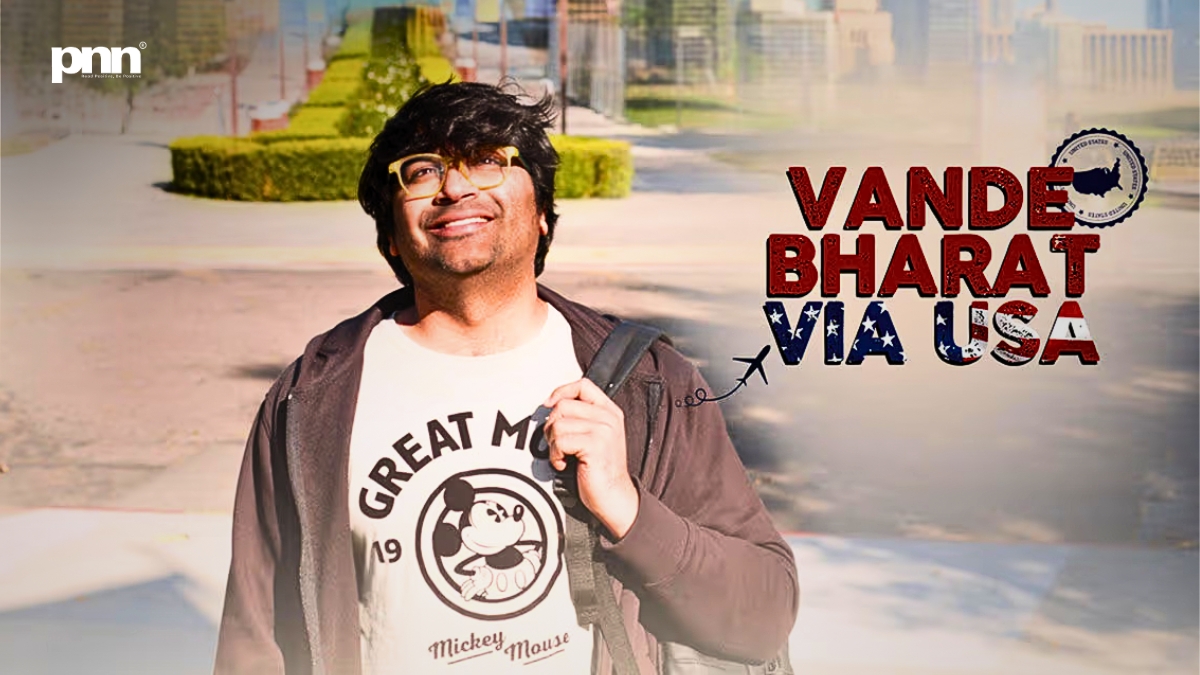
Mumbai (Maharashtra) [India], December 25: Some films announce themselves loudly. Others arrive carrying suitcases full of subtext. Vande Bharat Via USA belongs firmly to the latter category — a Gujarati-language film that doesn’t just travel geographically, but emotionally, culturally, and politically, all while pretending it’s “just entertainment.”
At face value, Vande Bharat Via USA positions itself as a diaspora drama — the kind Indian cinema has returned to repeatedly whenever identity starts feeling complicated. The title alone is telling. It doesn’t whisper nostalgia; it waves a flag, boards a flight, and invites you to question what exactly gets carried across borders: values, guilt, ambition, or just carefully folded patriotism.
This is not a film about tourism. It’s about transition.
A Film Born Out Of A Very Specific Moment
Gujarati cinema has been on an upward trajectory over the past decade — not just in volume, but in confidence. From rooted comedies to socially reflective dramas, the industry has slowly stopped asking for permission. Vande Bharat Via USA arrives during this phase of self-assurance, when regional films no longer feel compelled to either imitate Bollywood or apologise for their localness.
The film’s premise revolves around Indian characters navigating life in the United States, grappling with migration, belonging, cultural friction, and the ever-present tug-of-war between aspiration and attachment. It’s a familiar theme — but familiarity, when handled carefully, can become resonance rather than repetition.
And that seems to be the intent here.
What The Teaser Reveals (And What It Carefully Avoids)
The official teaser leans heavily on emotional cues: airport goodbyes, cultural contrasts, flashes of success, and moments of isolation disguised as opportunity. There’s pride, yes — but also unease. The film doesn’t present migration as a fairy tale, nor as a cautionary horror story. It walks an in-between line, which is both its strength and its risk.
Visually, the production values are polished, suggesting a mid-to-high budget by Gujarati film standards, reportedly estimated in the range of ₹8–10 crore, factoring in overseas shoots and post-production. For a regional film, that’s not pocket change — it’s a statement of intent.
The soundtrack cues familiarity rather than experimentation, signalling that the makers want emotional accessibility over artistic alienation.
Safe? Perhaps. Strategic? Definitely.
The Angle No One Says Out Loud
Here’s where the film becomes interesting — and slightly uncomfortable.
Vande Bharat Via USA is not just about Indians abroad. It’s about India watching its people leave, succeed, struggle, and sometimes not look back. The title suggests motion, but the emotional spine of the film appears rooted in a question: what happens to identity when success speaks a different accent?
This isn’t a rage-filled narrative. It’s more insidious than that. It’s polite. Emotional. Respectable. And yes, slightly judgmental — but in the way families often are.
There’s a quiet sarcasm embedded in the film’s worldview: the American Dream is attractive, but it doesn’t come with emotional refunds.
The Positives: Why This Film Could Work
Let’s be fair — and realistic.
Pros
-
Strong relatability for diaspora audiences, especially Gujarati communities abroad
-
Emotional storytelling that prioritises character over spectacle
-
Production quality that matches contemporary expectations
-
A theme that resonates across generations — parents, migrants, returnees
There’s also an undeniable market logic at play. Gujarati films have consistently performed well in overseas circuits, particularly in the US, UK, and Canada. A film set partly in the US is not just a creative choice — it’s a commercial one.
Early buzz suggests strong interest from non-resident Indian audiences, which could translate into respectable overseas collections, even if domestic box office numbers remain moderate.
The Negatives: Where The Film Risks Playing It Too Safe
Now for the inconvenient truths.
Cons
-
The narrative risks falling into familiar emotional tropes
-
Cultural complexity may be simplified for mass appeal
-
The “India vs USA” binary feels dated if not handled with nuance
-
There’s a thin line between pride and preachiness — and the teaser flirts with it
Gujarati cinema is evolving. Its audience is evolving faster. If Vande Bharat Via USA leans too heavily on emotional nostalgia without interrogating modern realities — visa anxieties, cultural hybridity, second-generation identity — it risks feeling sincere but shallow.
And sincerity alone doesn’t guarantee longevity.
Why This Film Exists Now (And Not Five Years Ago)
The timing matters.
Post-pandemic, migration narratives have shifted. Remote work blurred borders. Economic uncertainty redefined “settling abroad.” The idea of leaving India is no longer universally aspirational — it’s conditional. Contextual. Sometimes reluctant.
This film taps into that ambivalence. It arrives when being “global” is no longer aspirational by default, and being “rooted” is no longer considered limiting.
That tension is its real story — whether the film fully embraces it remains to be seen.
Box Office Expectations And Industry Reality
While official box office figures will only emerge post-release, industry tracking suggests:
-
Domestic opening: Modest but stable, driven by urban Gujarati audiences
-
Overseas performance: Potentially stronger, particularly in North America
-
Break-even likelihood: High, given controlled budget and niche targeting
This is not a film designed to chase blockbuster numbers. It’s built for sustainability, cultural relevance, and long-tail performance — especially on digital platforms post-theatrical run.
Final Thought (With Just Enough Bite)
Vande Bharat Via USA isn’t revolutionary. It doesn’t need to be.
It’s reflective. Calculated. Emotionally intelligent — if not entirely brave. It understands its audience, respects their experiences, and packages identity in a way that feels familiar without feeling careless.
Whether it becomes a defining film or simply a well-made chapter in Gujarati cinema’s growth story will depend on how honestly it confronts the contradictions it introduces.
Because flying abroad is easy.
Carrying who you are — without romanticising or apologising — is the real journey.
And that’s the story worth watching.